

Events & Reports (Disaster Relief)
Hygiene Kit Distribution Report – Sivasagar (7th August 2026)
Hygiene Kit Distribution Report – Sivasagar Overview Pro Rural Organisation,…
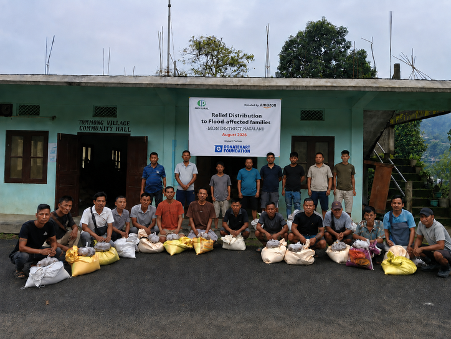
Date: 3rd August 2026
Location: Mon District, Nagaland
Activity: Emergency Relief Distribution to Landslide and Disaster-Affected Families
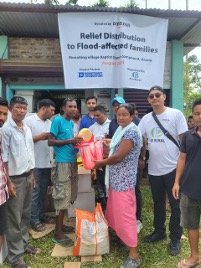
On 4th August 2026, emergency relief assistance was distributed to families affected by the recent landslides and disasters across four severely impacted locations in Mon District. The intervention aimed to support households whose homes were either completely destroyed or significantly affected, while also responding to the immediate humanitarian needs of the affected communities.
The assessment covered 150 households, of which 38 houses were completely destroyed and 101 households were partially affected. Tragically, the disaster claimed 8 lives and left 3 individuals injured. Relief materials were distributed to the identified beneficiaries to help address their immediate needs.
| Sl. No. | Location | Total Families | Deaths | Injured | Completely Damaged Houses | Affected Families |
| 1 | Thamnam Ward | 46 | 8 | 3 | 19 | 27 |
| 2 | Papong (Tankhao Ward) | 17 | 0 | 0 | 1 | 16 |
| 3 | Tammong Village (Mon Sadar) | 34 | 0 | 0 | 4 | 30 |
| 4 | Techa Ward | 53 | 0 | 0 | 14 | 28 |
| Total | 4 Locations | 150 | 8 | 3 | 38 | 101 |
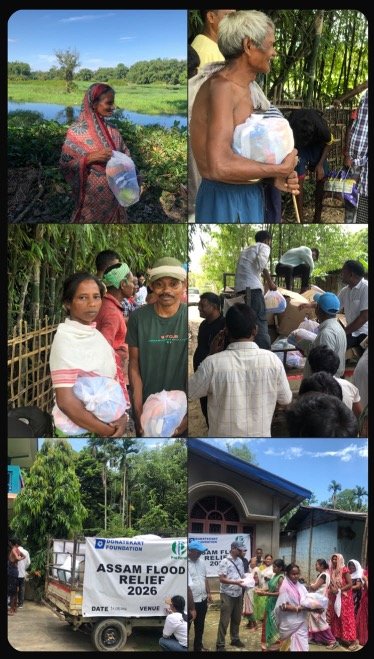
Emergency relief assistance was provided to the affected households to address their immediate needs following the disaster. The distribution focused on families whose homes had been completely destroyed as well as those significantly affected by the incident. The relief intervention aimed to ensure timely support for vulnerable households while helping them meet essential daily needs during the initial response phase.
The disaster caused significant humanitarian impacts across the four assessed locations, affecting 150 households, resulting in 8 fatalities, 3 injuries, and 38 houses being completely destroyed. Immediate relief distribution provided much-needed assistance to affected families; however, continued support will be essential for recovery. Priority should be given to temporary shelter, house reconstruction, livelihood restoration, food security, psychosocial support, and community resilience to help affected families rebuild their lives.
Events & Reports (Disaster Relief)
Events & Reports (Disaster Relief)
Events & Reports (Disaster Relief)
Events & Reports (Disaster Relief)